Kabocha Pumpkin Pie in Japan: How to Replace American Canned Pumpkin Purée
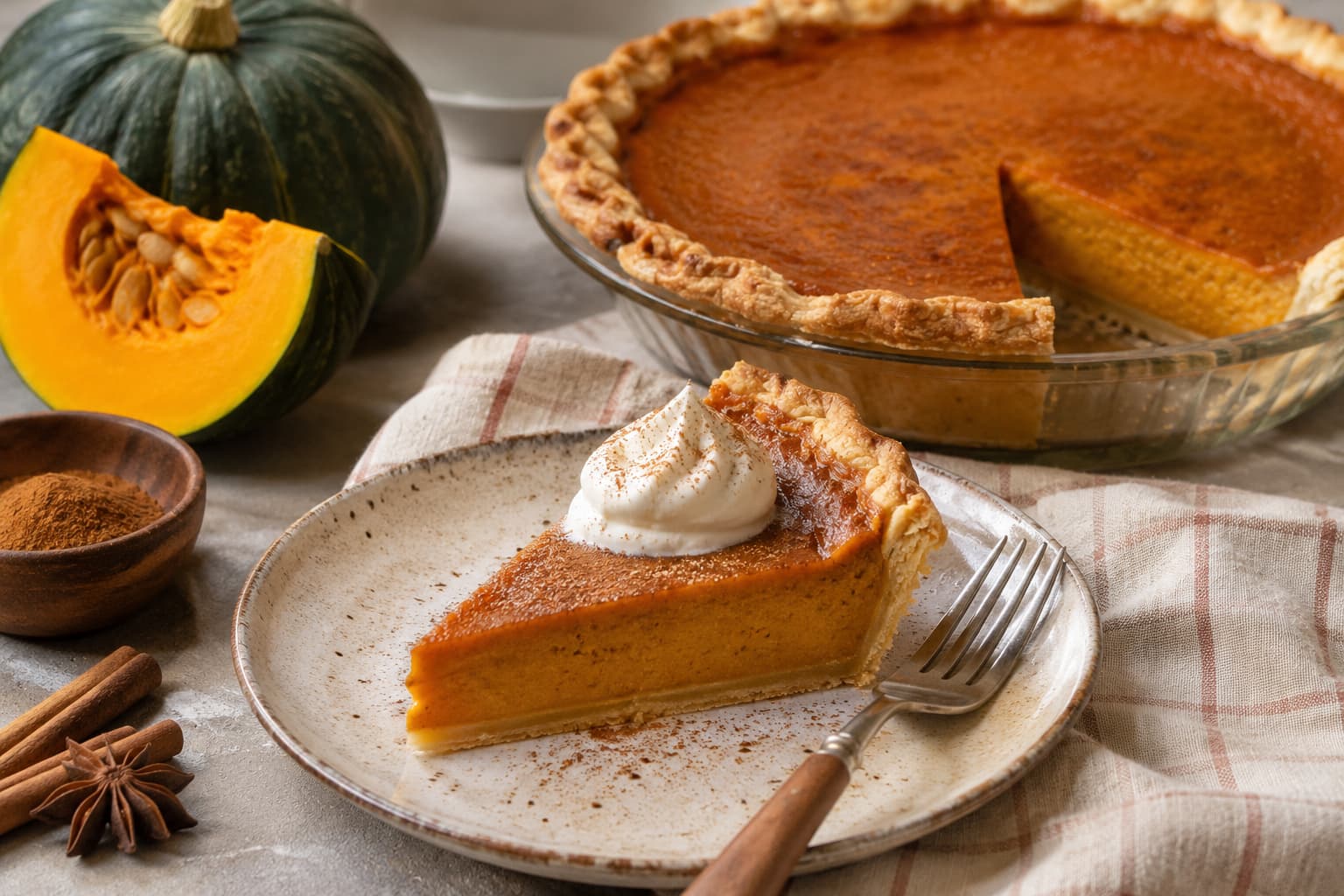
American pumpkin pie recipes usually start with a 15-ounce can of pumpkin purée. In Japan, that ingredient can be difficult to find in an ordinary supermarket, especially outside the autumn holiday season. Fortunately, Japanese kabocha squash makes an excellent substitute. Its naturally sweet flesh and dense texture work particularly well in custard-based pies.
The important difference is moisture. Fresh kabocha cannot always be used exactly like canned pumpkin straight from the oven. How you cook, drain, and measure the squash determines whether your pie develops a smooth filling or a soggy crust.
Why Kabocha Works in American Pumpkin Pie
Kabocha, commonly sold as カボチャ in Japanese supermarkets, has dark green skin and deep orange flesh. Its flavor combines the earthy qualities of pumpkin with the sweetness and slightly nutty character of a sweet potato.
American canned pumpkin is different from the large orange pumpkins used for Halloween decorations. Commercial purée is generally produced from selected cooking varieties, including Dickinson squash, chosen for their consistency and texture.
Kabocha has a few advantages for homemade pie. It provides a rich flavor without excessive seasoning, and its relatively dense flesh can produce a creamy filling with less added liquid.
However, sweetness and moisture vary between individual squashes. Some become dry and fluffy after roasting, while others release more water. This is why checking the purée’s consistency matters more than following a fixed cooking time.
Choosing and Preparing Kabocha
Look for a squash that feels heavy for its size, with firm skin and no soft or damaged areas. A medium kabocha weighing approximately 1-1.3 kg should provide enough flesh for one pie, although the usable yield varies.
Cutting a whole kabocha can be difficult because its skin is extremely firm. Use a stable cutting board and a sharp knife. Briefly warming the squash can make cutting easier.
For pumpkin pie, roasting is preferable to boiling. Boiling introduces additional water, while roasting concentrates the natural flavor.
To prepare the purée:
Wash the squash, cut it in half, and remove the seeds and stringy center. Place the halves cut-side down on a parchment-lined baking tray.
Roast at 200°C (390°F) for approximately 40-60 minutes, depending on size. The flesh should become tender enough to pierce easily with a fork.
Allow the squash to cool, then scoop out the orange flesh, leaving the green skin behind. Although kabocha skin is edible, removing it produces a more uniform pie filling.
Blend the flesh until completely smooth. If necessary, press it through a fine-mesh sieve to remove remaining fibers.
Matching the Texture of Canned Pumpkin Purée
A standard American can contains approximately 425 g of pumpkin purée. For a direct replacement, use the same weight of prepared kabocha.
The purée should be thick enough to hold soft ridges when stirred but smooth enough to spread with a spoon.
If it looks watery, place it in a fine-mesh strainer for 30-60 minutes. Alternatively, cook it in a wide saucepan over low heat, stirring regularly until excess moisture evaporates.
If the mixture is unusually thick, avoid adding water immediately. The cream and eggs in the pie filling will loosen it naturally.
Always measure the final purée after draining. Measuring before removing excess moisture can leave you with less pumpkin than the recipe requires.
American-Style Kabocha Pumpkin Pie Recipe
This version produces one 23 cm (9-inch) pie with a lightly spiced, creamy filling. It preserves the character of American pumpkin pie while allowing the natural sweetness of Japanese squash to remain noticeable.
Ingredients
- 425 g roasted kabocha purée
- 1 prepared 23 cm pie crust
- 100 g brown sugar
- 2 large eggs
- 1 additional egg yolk
- 180 ml heavy cream
- 1 teaspoon ground cinnamon
- ½ teaspoon ground ginger
- ¼ teaspoon ground nutmeg
- A small pinch of ground cloves
- ¼ teaspoon salt
Prepare the crust
Preheat the oven to 190°C (375°F). Place the pastry in the pie dish and chill it until firm.
Line the crust with parchment paper and fill it with baking weights or dried beans. Bake for approximately 15 minutes, remove the weights, and continue baking for another 5 minutes until the base begins to dry and lightly color.
This partial baking helps prevent moisture from the pumpkin filling from soaking into the pastry.
Mix the filling
Reduce the oven temperature to 175°C (350°F).
In a large bowl, combine the cooled kabocha purée with brown sugar, cinnamon, ginger, nutmeg, cloves, and salt.
Add the eggs and extra yolk, mixing gently until incorporated. Pour in the cream and stir until the filling is uniform.
Avoid vigorous whisking, which introduces unnecessary air and can cause the custard to rise unevenly.
Bake the pie
Pour the filling into the prepared crust and smooth the surface.
Bake for approximately 40-50 minutes. The outer section should appear set, while the center should still have a gentle wobble when the dish is moved.
Remove the pie before the center becomes completely firm. Residual heat will continue cooking the custard as it cools.
Allow the pie to cool before slicing. For cleaner portions and a firmer texture, refrigerate it for several hours.
Common Problems When Baking With Kabocha
The filling is too thick. This usually happens when the roasted squash is especially dry. Add a small amount of extra cream rather than water, and mix until the filling pours smoothly.
The crust becomes soggy. Excessively wet purée or an underbaked pastry base is often responsible. Drain the squash thoroughly and partially bake the crust before filling.
The pie cracks while cooling. Overbaking causes the egg custard to contract. Remove the pie while its center still moves slightly.
The flavor is too sweet. Kabocha can be sweeter than American canned pumpkin. Reducing the brown sugar to 80 g is reasonable when using particularly sweet squash.
The texture feels grainy. Blend the roasted flesh thoroughly before adding the other ingredients. A fine-mesh sieve can help create a smoother custard.
Storing Homemade Kabocha Purée
Fresh purée can be prepared ahead of time and refrigerated in a covered container for approximately three to four days.
For longer storage, portion it into 425 g quantities and freeze in airtight containers. Thaw overnight in the refrigerator and check for separated moisture before using.
The finished pie contains eggs and dairy, so it must also be refrigerated. Store it covered and consume within three to four days.
Kabocha does not produce an identical copy of American canned pumpkin, and that is part of its appeal. Its fuller flavor and naturally creamy texture can make a traditional Thanksgiving dessert particularly satisfying. With careful roasting and moisture control, there is no need to search specialty import stores for a can of pumpkin purée.